


Papilloma belongs to the group of viral diseases and is manifested by the formation of growths on the skin and mucous membranes.Some types of neoplasms pose a serious danger to humans.
Therefore, to avoid infection, you need to know how papilloma is transmitted and follow simple rules of prevention.
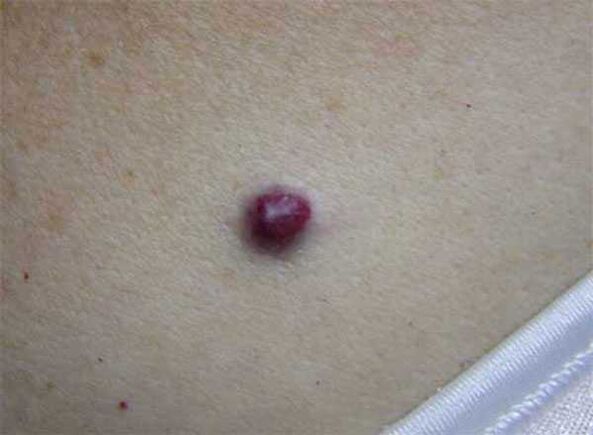
Human papillomavirus is part of a group of viruses that belong to the papillomavirus family.This group includes 5 genera, about 43 species, more than 170 types.
Human papillomavirus is one of the most common groups.About 60% of the world's population are its carriers.
The danger is not only in the question of "is the virus contagious", but also in the fact that the infected person may not feel any symptoms, and may not even suspect that the virus has entered his body.
Papilloma viruses live and actively reproduce in the basal layer of the skin.At the same time, they are capable of spreading from one organism to another.
It has been proven that the virus can develop for a short time in the external environment, but usually the entire life cycle takes place inside the cell.
Most types of viruses are not dangerous to human health, but there are types with oncogenic properties that can cause malignant or benign tumors.
They can be classified as follows:
Safe(if we take into account the probability of developing cancer).
They occur without pronounced symptoms and are not dangerous for the human body;
Low risk- when they enter the body, genital warts occur in 90% of cases.In isolated cases, cell mutation can be observed;high risk.
In the presence of certain factors, they can cause the development of cervical cancer and cause the degeneration of cells into atypical ones.
There are viruses that are transmitted from human to human, but there are also types that exist in the bodies of birds and animals, but do not pose a danger to humans.
Given the prevalence of the virus, it is necessary to know how papilloma is transmitted.HPV can be transmitted by contact or vertical (from mother to fetus during pregnancy) method.
Contactincludes contact-domestic and sexual routes.Can you get a virus through a kiss?This is also possible if the infected person has warts caused by HPV in the oral cavity.
The fetus can become infected through a damaged placenta.Laboratory studies revealed the likelihood of infection due to toxicosis.

Papilloma virus can be transmitted both sexually and through household contact.In the latter case, simple communication with a human carrier does not always lead to infection.
One of the conditions under which the probability of infection increases significantly is a violation of the barrier function of the mucous membrane and skin.
The risk of infection is high when there are scratches, cuts, wounds and scratches on the skin.Due to the decline of general and local immunity, the body's defense reactions worsen.
With insufficient production of class A antibodies, the normal functioning of the immune system is impaired, and the body's sensitivity to viruses and infections increases.
Various sexually transmitted diseases can act as a provoking factor that contributes to papillomavirus infection: chlamydia, mycoplasmosis, gonorrhea, etc.
The standard manifestation of the papilloma virus in such a situation is the appearance of condylomas on the genitals.Deterioration of immunity indicators is observed against the background of disorders of the microflora of the vagina and intestines.The immune system of people with HIV is seriously impaired.
Papilloma virus is activated under the following conditions:
- the presence of dysbacteriosis and intestinal diseases of an infectious nature;
- Acute phase of any chronic disease;
- Bad working conditions;
- hypothermia;
- Congenital immunodeficiency condition;
- Acute phases of infectious and non-infectious diseases;
- Stressful conditions;
- Poor nutrition.
The course of HPV is characterized by a long incubation period.After infection, it may take several years for symptoms to appear, which become more pronounced during a period of weakened immunity.
Ways of transmitting papillomas
Papilloma virus is transmitted by contact in the household:
- By handshake;
- Through personal hygiene products (soap, towels, etc.);
- When trying on someone else's clothes (you must never wear someone else's underwear);
- When visiting public baths, saunas.
The sexual route of infection is especially dangerous, because the risk of infection with an oncogenic subtype of the virus is high.The most vulnerable are people who have a large number of sexual partners.
This also applies to men who are prone to homosexual relations, because during such sexual relations there is a high probability of skin and mucous membrane injuries.
Also, the probability of mutual transmission of the virus during sexual intercourse increases if the partner has genital warts - they are easy to injure and are highly contagious.
Human papillomavirus in pregnant women can be transmitted to the fetus.During pregnancy, this happens in rare cases;usually the child becomes infected while passing through the birth canal.
It should be noted that the virus is inherited from mother to child only if there are external manifestations of the disease on the genitals.
Infection of children at birth is accompanied by papillomatosis of the larynx, which is characterized by severe impairment of respiratory function.
There is also a possibility of infection during breastfeeding.
The papilloma virus causes changes in cells, as a result of which they divide, which leads to the appearance of tumors (warts).At a young age, warts most often appear on the fingers, elbows and knees.
These are non-cancerous formations, dense to the touch, whose color can vary from light to black.Their size is about 1 cm in diameter.
In old age, HPV is manifested by the formation of papillomas.They are soft and attached to the skin with a stem.As a rule, their color matches the skin color, but sometimes they can be dark brown.
Most often, papillomas are found on the following parts of the body: face, neck, armpits, genitals.In men, neoplasms can appear on any part of the penis.
Sometimes the presence of a virus can affect the state of the urethra, causing difficulty urinating and pain.
When the virus enters the female body, neoplasms appear on the mucous membranes of the external genitalia.Sometimes they can be found on the mucous membranes of the mouth and throat.
Human papillomavirus can affect the cervix, urethra, vagina and anus.
Looking at photos of people with HPV, you can see how much neoplasms can spoil the appearance, although the main danger lies in their possible degeneration into malignant tumors.
Doctors advise that when papillomas are detected, they conduct studies to determine their oncogenicity and remove them.Photo: growths on the mucous membrane of the tongue
Which types of HPV are the most dangerous?
Even those who know how the human papillomavirus is transmitted cannot always avoid infection.However, you should not panic if you are diagnosed with this condition.
First you need to find out the genotype of the virus - some of them are safe for humans.90% of those infected were diagnosed with HPV-6 and HPV-11, which are characterized by low cancerous risks.
The most dangerous strains are: HPV-16, 18, 31, 33, 45, 51, 52, 56, 58, 59.
Treatment of papillomavirus in women
90% of women who die from cervical cancer are diagnosed with HPV.The virus often develops against the background of inflammation affecting the genitals.
These can be: vulvovaginitis, endocervicitis, pseudoerosion of the cervix.It is often combined with diseases such as chlamydia, trichomoniasis, syphilis, herpes.The main symptoms of papillomavirus in women are:
- itching and burning in the genitals;
- specific secretions;
- difficult urination;
- unpleasant sensation during sexual intercourse;
- proliferation and fusion of genital warts.
Genital warts can appear on the vulva, urethra, vagina, cervix, anus, rectum and perineum.
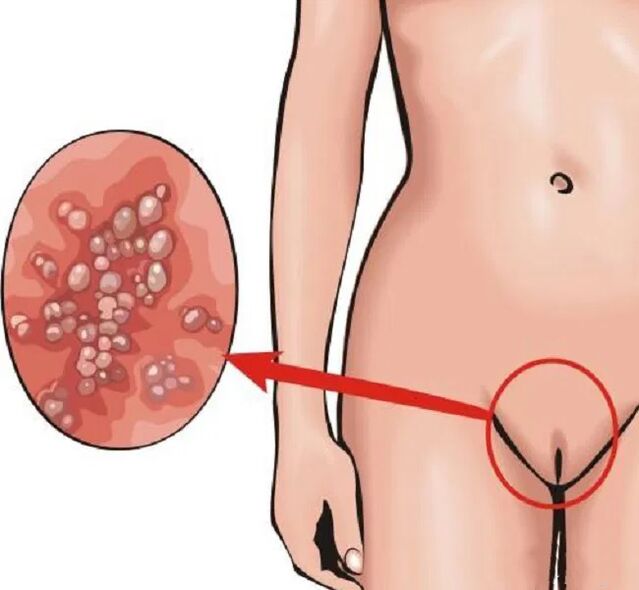
These manifestations of HPV not only look unattractive, but also cause discomfort: pain, itching and bleeding.
Detection of cervical intraepithelial dysplasia in HPV indicates the development of a cancerous process.
Diagnostics
The diagnosis is made by taking tests and carrying out laboratory tests.
The following methods can be used: PCR;colposcopy;biopsy.An effective diagnostic method is the PCR method.
It allows you to get an analysis for each type of virus, as well as to determine the number of DNA copies in the research material.
Thanks to the precision of this method, experts can identify the severity of the disease and make a prognosis.You have to prepare for the tests.
The patient should not have sexual activity, drink alcohol or take antiviral drugs for several days.
Colposcopy is an examination of the cervix using a special microscope.The cervix is lubricated with a solution of acetic acid, which reveals the papillomas and they become clearly visible.
During the biopsy, an area of the affected tissue is taken for examination.This material is subsequently dyed and tested.Biopsy is a very precise research method that can be used in combination with histology and cytology.
Treatment
Unfortunately, it is not known how HPV can be treated with drugs.Therefore, the only treatment option today is papilloma removal.
Medicines are prescribed only as maintenance therapy.
Direct removal can be done by several methods:
- electrocoagulation;
- laser;
- radio waves.
The electrocoagulation method involves the use of high-frequency current.After treating the papilloma, a crust is formed with it, which comes off by itself after a few days.
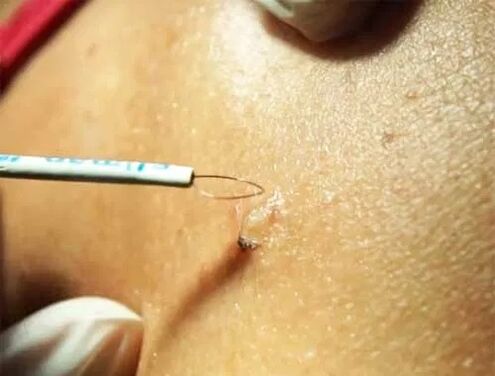
The method is used to remove tumors located on the face and neck.
Laser removal is also common, but has a number of disadvantages.
First, the removed papilloma cannot be examined.Second, scars may form at the site of removal.
The most modern method is radio waves.
This is a safe, painless method, after which no traces remain on the body.
The cryodestruction method for papilloma removal is based on the use of liquid nitrogen.Areas of tissue to be removed are flash frozen.
In this case, minor discomfort may occur.The entire area of dead skin peels off 2-6 weeks after the treatment.
Prevention
Understanding the spread of the virus, I want to not only find out if papillomas are contagious, but also what can be done to avoid infection.
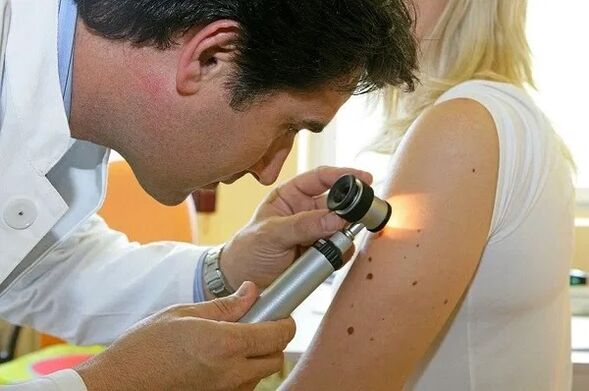
As a preventive method, a special vaccine can be used that reduces the risk of infection with common highly oncogenic types of HPV.
It is used mainly for prevention in women.As a rule, it is recommended between the ages of 9 and 25.
It is believed that even if the virus has already entered the body, the vaccine can inactivate it and increase immunity.
Non-specific prevention methods include basic rules of personal hygiene and proper lifestyle:
- if the integrity of the skin is damaged, they must be treated;
- You may not use other people's products for personal hygiene;
- in public saunas, the use of rubber slippers is recommended;
- one should not allow any disease to progress to a chronic stage;
- relationship with a regular sexual partner;use of condoms;
- tempering and moderate physical activity;
- proper and regular diet.
Following these simple rules will help significantly reduce the risk of infection with the papilloma virus and protect your body from its penetration.